



DDR5 RAMS Product Series
The Indilinx DDR5 RAM product series represents the latest and most advanced standard in memory technology, delivering unprecedented performance, efficiency, and density for next-generation computing systems. These modules fundamentally reshape memory architecture by introducing significantly higher base speeds starting from 4800MT/s and extending beyond 8000MT/s, coupled with a dual 32-bit channel design per module for dramatically improved bandwidth. Key innovations include an integrated Power Management IC (PMIC) for enhanced power efficiency and voltage regulation, support for much higher module capacities, and advanced On-Die Error Correction (ODECC) for greater reliability. Engineered for compatibility with the latest Intel and AMD platforms, the DDR5 series is essential for high-performance gaming, intensive content creation, AI workloads, and data center applications, setting a new benchmark for speed and future-proof system scalability.
Revolutionary Performance with Higher Speeds & Bandwidth Delivers dramatically faster data transfer rates, starting from 4800MT/s and beyond.
Advanced Architecture with On-Module Power Management Features an integrated PMIC for improved voltage regulation and power efficiency.
- ALL DDR
- DDR3
- DDR4
- DDR5
DDR5

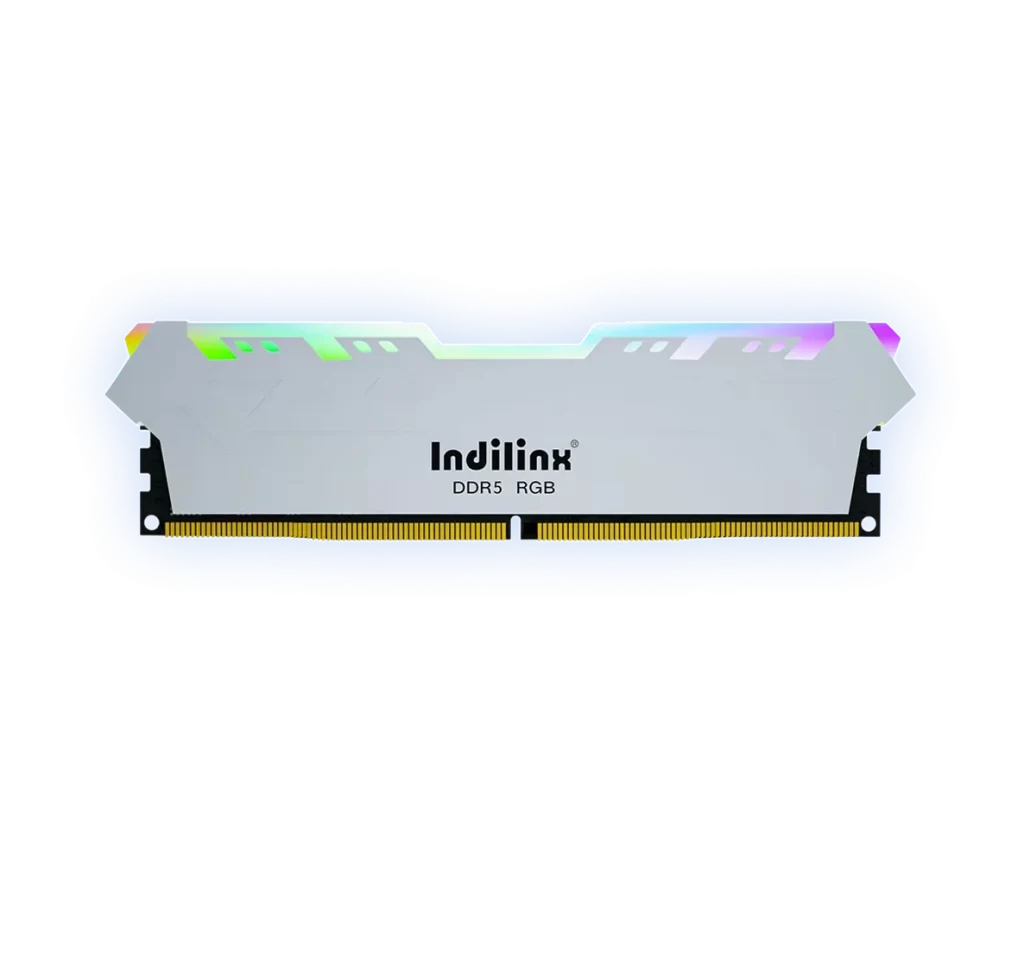
MIDDLE DDR5 UDIMM
Engineered for stable high-speed performance and dependable data integrity.
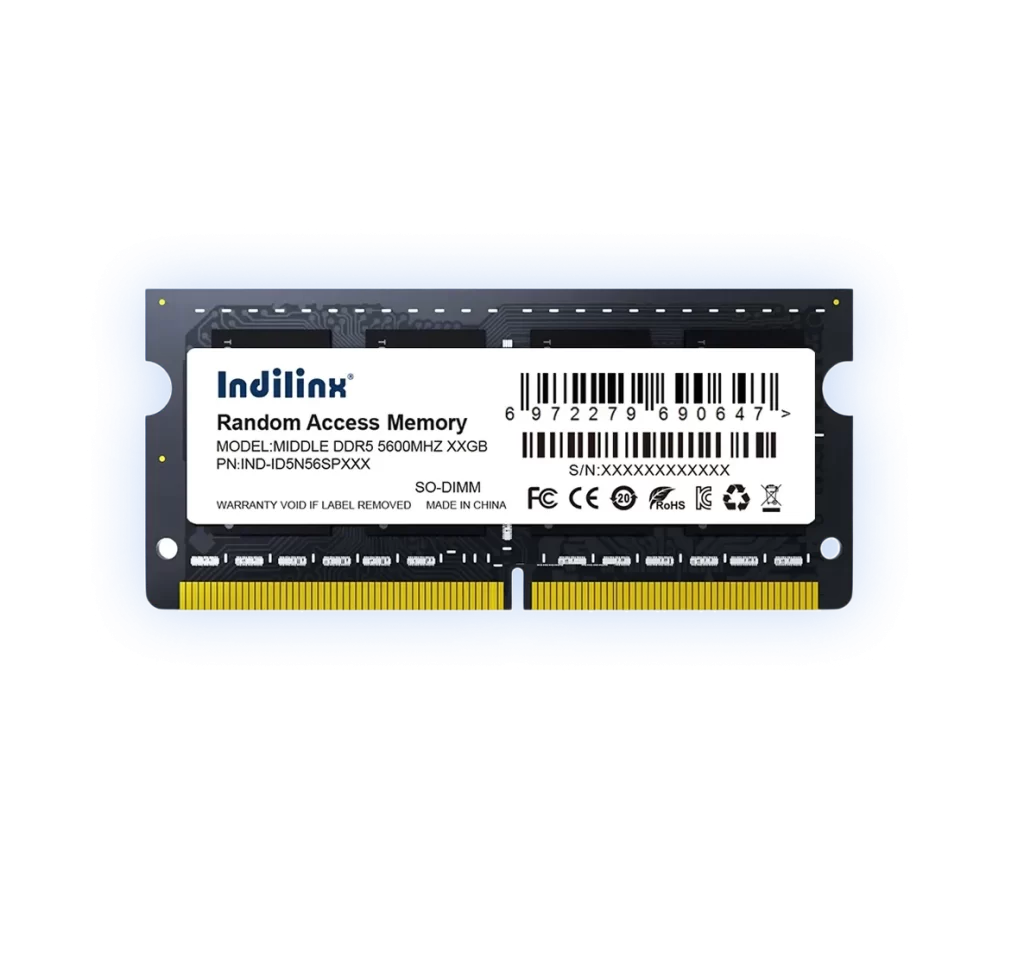
MIDDLE DDR5 SODIMM
Engineered for stable high-speed performance and dependable data integrity.
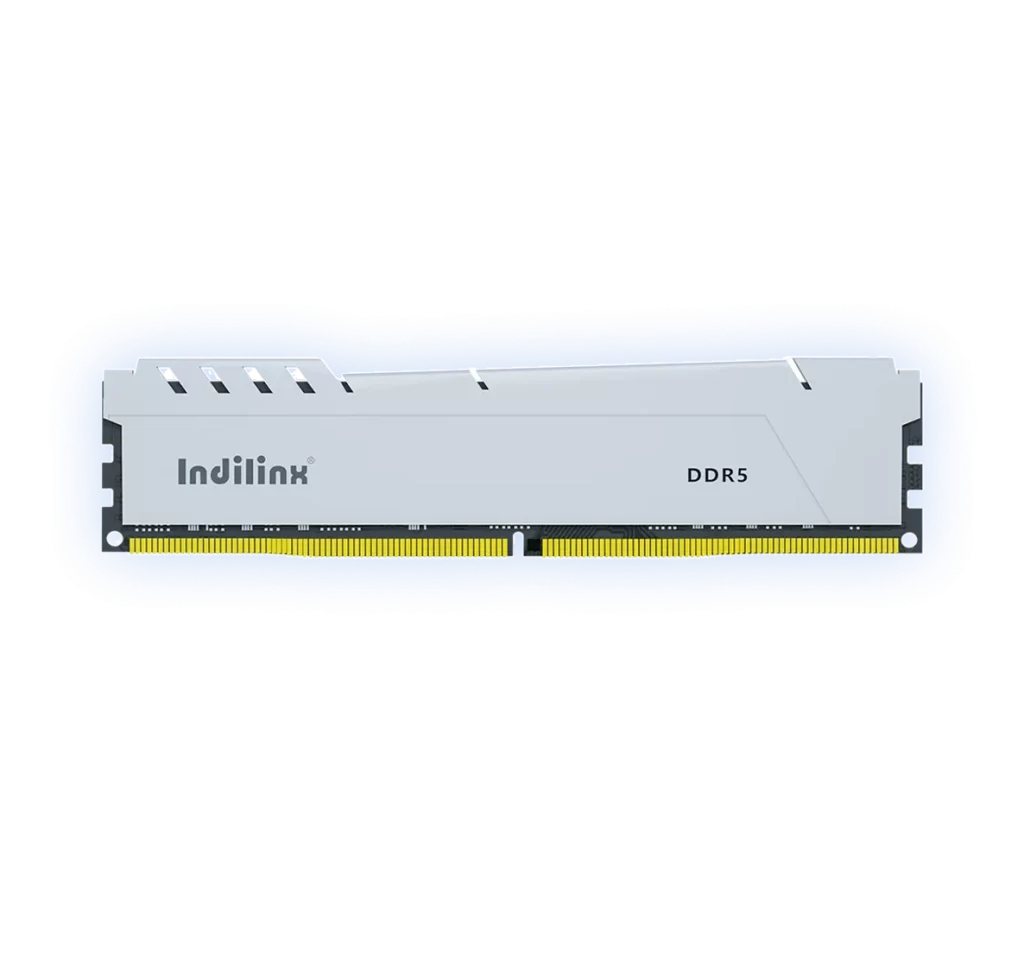
MAGIC II DDR5 UDIMM
Classic and highly compatible memory option suitable for industrial systems, embedded devices and legacy platforms requiring stable long-term supply
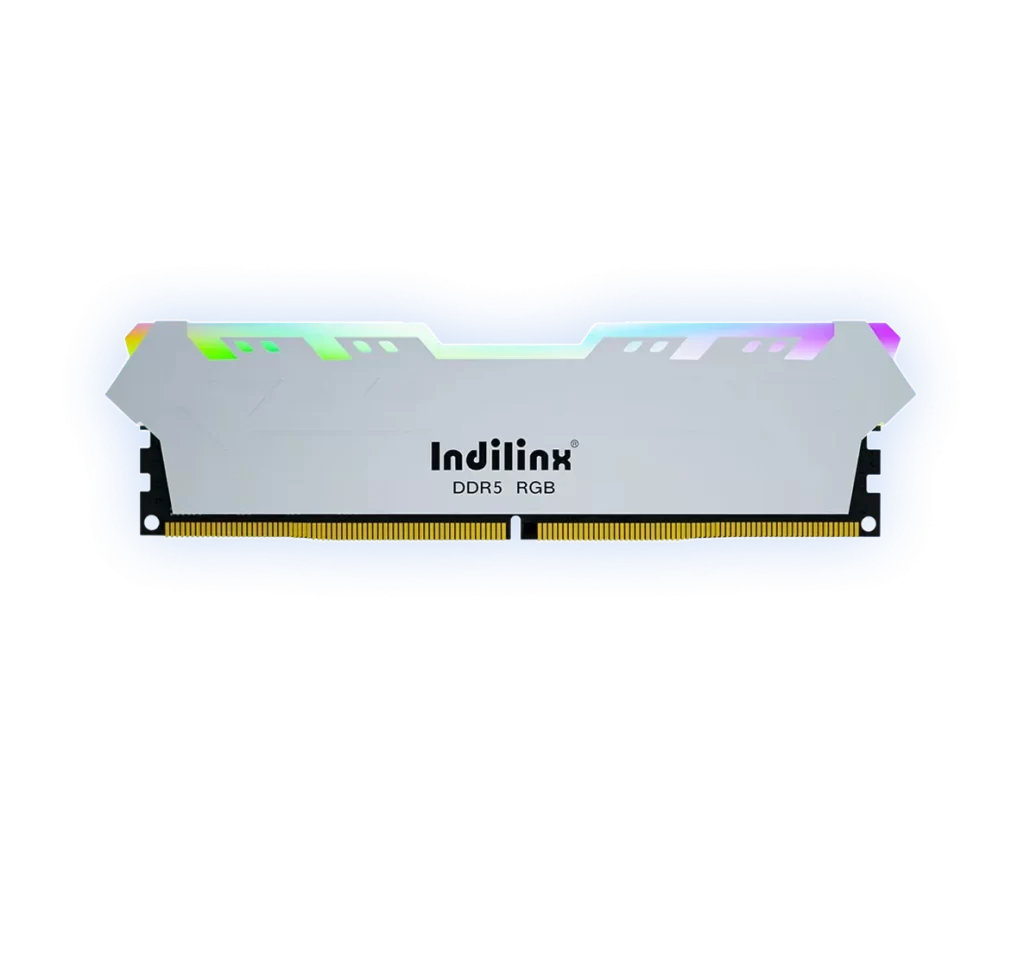
MAGIC II RGB DDR5 UDIMM
Classic and highly compatible memory option suitable for industrial systems, embedded devices and legacy platforms requiring stable long-term supply
High-Performance DDR5 Memory (RAM) Knowledge
Indilinx High-performance DDR5 memory stands at the forefront of system performance, delivering transformative speed and efficiency gains through its groundbreaking architectural innovations. Unlike previous generations, DDR5 fundamentally reengineers the memory subsystem by integrating a Power Management IC (PMIC) directly onto the module, enabling finer voltage control and greater power efficiency. This allows for significantly higher operating frequencies, with speeds now routinely reaching 6000MT/s to 8000MT/s and beyond, effectively doubling the bandwidth available to modern CPUs. Furthermore, DDR5 utilizes a dual 32-bit subchannel architecture per module, which enhances command efficiency and reduces access latency for improved real-world responsiveness. For extreme overclocking and mission-critical stability, high-performance kits also feature advanced cooling solutions and robust XMP 3.0/EXPO profiles with multiple user-configurable settings. Essential for next-generation gaming, 4K/8K content creation, AI model training, and data-intensive professional applications, investing in high-performance DDR5 is the definitive step to unlocking the full potential of current and upcoming Intel and AMD platforms, ensuring both peak performance today and headroom for tomorrow’s software demands.
Architectural Revolution: Beyond Just Speed
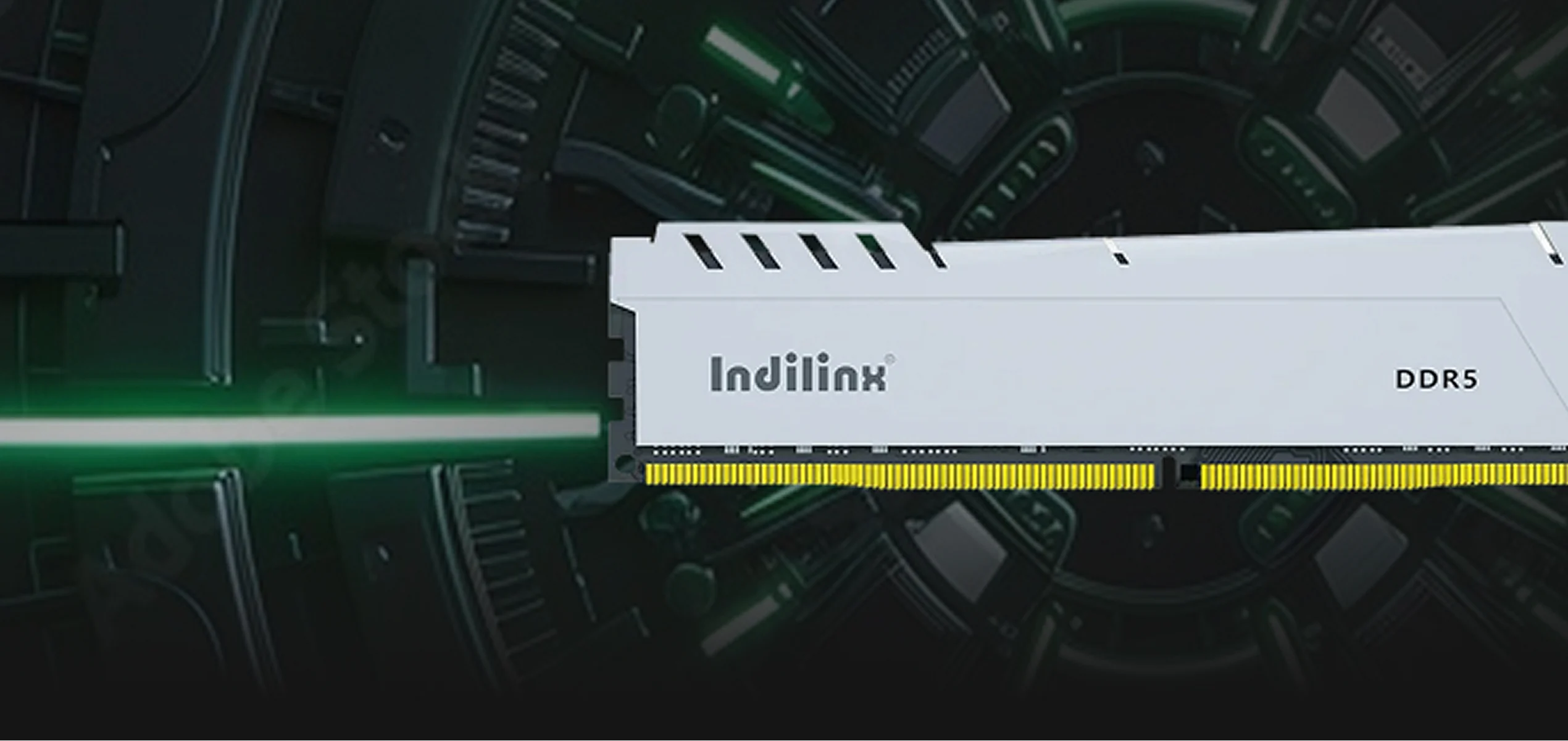
Indilinx High-performance DDR5 is not merely about higher clock speeds; it represents a foundational redesign of memory architecture. The most significant innovation is the integration of the Power Management IC (PMIC) onto the module itself. This shift from motherboard-based control allows for more precise, stable, and efficient voltage regulation, which is crucial for achieving and sustaining extreme frequencies. Coupled with a dual 32-bit subchannel design per module (effectively creating two narrower, independent channels), DDR5 significantly improves command/address efficiency and concurrency. This architectural overhaul delivers massive gains in both raw bandwidth and real-world responsiveness for data-intensive applications.
Why are DDR5 CAS latencies (like CL40) so much higher than DDR4 (like CL16)?
The CAS latency number is measured in clock cycles. While DDR5 has more cycles of latency, each cycle is significantly shorter due to the much higher clock speed. When calculated in nanoseconds (ns), the real-world latency of a good DDR5 kit is often similar to or better than high-end DDR4.
Is DDR5 compatible with my older motherboard that has DDR4 slots?
No, DDR5 and DDR4 are not physically or electrically compatible. They have different key notches and pin counts. You must have a motherboard and CPU platform specifically designed for DDR5 memory.
What is the PMIC on a DDR5 module, and why is it important?
The PMIC (Power Management Integrated Circuit) is a chip on the DDR5 module that handles power delivery. It provides more stable and efficient voltage regulation than the old motherboard-based system, which is essential for achieving DDR5’s high speeds and can improve overclocking potential.
Do I need to enable a setting for my DDR5 RAM to run at its full speed?
Yes. Like with DDR4, you must enable the pre-configured overclocking profile in your BIOS. For DDR5, this is typically an XMP 3.0 (Intel) or EXPO (AMD) profile. Without this, the RAM will run at a much lower standard JEDEC speed (e.g., 4800MT/s).
Decoding Specifications: Speed, Latency, and PMIC
Performance is defined by a new generation of metrics. Speed remains paramount, with high-performance kits starting at 6000MT/s and scaling beyond 8000MT/s. However, due to the inherent design, CAS latency (CL) values are numerically higher than DDR4 (e.g., CL36 vs. CL16). It’s critical to evaluate performance in nanoseconds of true latency, where top DDR5 kits remain competitive. The PMIC enables these speeds but also introduces new considerations for cooling and compatibility. Understanding these intertwined specs—frequency, a timing series like CL36-38-38-80, and the role of the PMIC—is key to selecting the right kit.
Optimization and Platform Compatibility
Indilinx To unlock advertised performance, enabling XMP 3.0 (Intel) or EXPO (AMD) profiles in the BIOS is mandatory. These modern profiles are more robust and can offer multiple configurable speed settings. Compatibility is more complex with DDR5; always verify the memory kit is on your motherboard’s Qualified Vendor List (QVL), as subtiming training can be platform-sensitive. For optimal performance, ensure your motherboard’s BIOS is updated to the latest version for improved memory training stability and compatibility with high-frequency kits.
Use Cases and the Sweet Spot
The benefits of high-performance DDR5 are most dramatic in bandwidth-saturating and latency-sensitive workloads. This includes professional 4K/8K video editing, 3D rendering, scientific computing, and competitive gaming at high refresh rates. For most users building a high-end system today, DDR5-6000 to DDR5-6400 kits with reasonable timings represent the current performance “sweet spot,” offering an excellent balance of high bandwidth, manageable latency, and broad platform stability, providing a significant uplift over previous generations.
DDR5 Memory(RAM) Technical Services and Warranty Programs
As Indilinx DDR5 memory represents the forefront of performance with its advanced architecture, ensuring its reliable and stable operation requires dedicated technical support and robust warranty protection. Our comprehensive service programs are designed to support users from initial system integration through the long-term lifespan of their hardware. This includes specialized assistance for the unique aspects of DDR5 technology, such as PMIC functionality and high-frequency compatibility training, alongside industry-leading warranty coverage. These services provide essential peace of mind for enthusiasts, professionals, and enterprises who depend on cutting-edge memory performance for gaming, content creation, and data-intensive computational tasks, safeguarding their investment against potential issues.
DDR5-Specific Technical Support
Expert assistance for PMIC, high-frequency stability, and platform compatibility issues.
DDR5 Memory(RAM) Product Files Download

download”AS SSD Benchmark.rar-221.89KB

download”AS SSD Benchmark.rar-221.89KB